The lights always pick the worst time to blink out. Halfway through roasting a chicken, mid-video call with the regional team, or five minutes before kickoff. A home generator removes that knot-in-the-stomach moment and turns it into a non-event. The fridge hums, the furnace stays steady, and your neighborhood looks like a ship lost at sea while your home glows like the lighthouse. Installing the right system, however, is not a plug-and-play project. It is a coordination dance with permitting, gas and electrical codes, load management, site planning, and long-term maintenance. That is where a seasoned Residential Electrician earns their stripes, and why homeowners call TDR Electric when they want the job done properly the first time.
This guide draws on the same field experience we bring to living rooms, backyards, crawl spaces, and commercial rooftops. We will dig into generator choices, the installation sequence, why transfer switches matter more than brand stickers, and how to keep your system ready for years. We will also point to related upgrades like Surge Protection Installation, Smoke Detector Installation, and Smart Thermostat Installation that round out a resilient home. If you have been weighing a generator after last winter’s outage or you are comparing quotes now, this will sharpen your decision.
Why people install generators, and who really needs one
The obvious reasons are comfort and convenience, but the real motivation tends to be either financial or medical. If you work from home or run a small side business, downtime translates to lost income and strained client trust. If you rely on refrigerated medication or powered medical devices, an outage is not a nuisance, it is a hazard. Even without those pressures, a sump pump that stalls during a storm can flood a basement, and frozen pipes do more damage in three hours than a generator costs to install.
Not every home needs whole-house backup. Some households are perfectly satisfied keeping essentials running, especially in infill neighborhoods with short outages. Others live at the end of a line and measure downtime in hours or days. Our job is to size the system to your reality, not to a glossy brochure. It is the conversation at the kitchen table that tells us whether you want the espresso machine online or just the well pump and furnace.
Portable, standby, or battery: what actually fits your life
You have three realistic paths when you talk about maintaining power: a portable generator, a permanently installed standby generator, or a whole-home battery. Each has a personality and a maintenance profile.
Portable generators lure with low upfront cost and simple ownership. Roll it out, start it, plug it into a manual transfer inlet, and you are in business. The catch shows up at 2 a.m. in a storm. You have to fuel it, keep it away from windows, wheel it through sleet, and remember to test it every few months. We install safe interlock kits and inlets for portable setups all the time, especially for small homes that want to cover a fridge, a few outlets, and the heat source. If you choose a portable, we will still steer you toward CO monitoring and proper ventilation. Carbon monoxide does not care that you saved a few thousand dollars.
A permanent standby generator is the hands-off option. It sits on a pad, tied to natural gas or a propane tank, and starts automatically when the power drops. Typical air-cooled units range from about 10 kW to 26 kW. That covers most single-family homes. If you have multiple HVAC condensers, a large well pump, or you want to run a detached workshop at the same time as the main house, a liquid-cooled unit in the 30 kW to 48 kW range makes more sense. These systems pair with an automatic transfer switch that isolates your home from the grid before backfeeding can occur, then flip back when the utility returns. You barely notice beyond a slight pause and a beep from the oven clock.
Whole-home batteries are the quiet, indoor-friendly cousin. They shine with Solar Panel Installation, especially for homes with frequent short outages. They are responsive, stackable, and require minimal maintenance. The limitation is energy density and cost when you want to run large loads over multiple days. A battery bank that will drive a typical 3-ton heat pump, kitchen, and well pump through a 48-hour storm is doable, but the price tag usually pushes people toward a generator unless solar production is steady.
TDR Electric often installs hybrid systems: a modest battery for instant response and load shaping, and a generator for long-duration events. The battery handles quick blips and nightly peak shaving; the generator only wakes for extended outages, sipping fuel and preserving its hours.
Sizing without guesswork: kW math that matches behavior
Sizing a generator is like fitting a suit. It needs to move with you without extra fabric flapping. We start by listing must-run loads and then we model starting currents. The dryer, oven, heat pump, and well pump have very different appetites.
A typical “essentials” circuit mix includes the furnace or boiler, the fridge and freezer, sump pump, some kitchen outlets, lighting circuits, and the home office circuits. That bundle often lands in the 5 kW to 9 kW running range, with starting surges pushing to 12 kW briefly. A whole-house target often lands in the 14 kW to 24 kW range, with load management modules that temporarily shed non-critical loads. For example, we might let the heat pump start first, then allow the oven to come online after the compressor settles. Smart load management makes a 14 kW unit feel like a 22 kW on most days because it avoids stacking surges. It also saves thousands on the generator and the gas service upgrade.
Two anecdotes illustrate the logic. A client with radiant heat, gas cooking, and no well pump covered their entire 2,200 square-foot home comfortably with an 11 kW generator because their electrical peaks were modest. Another client with a deep well, two condensers, and an electric range went with a 24 kW unit but tied the ovens to a managed circuit so they could still cook without tripping the system. Neither household felt restricted because we calibrated the system to their habits, not to abstract averages.
The quiet hero: transfer switches and how they protect you
Transfer switches are the unsung guardians in a Home Generator Installation. They ensure your generator never backfeeds to the utility lines, which could endanger lineworkers and damage equipment. They also protect your generator from the grid when power returns. Manual switches are fine with portables. For standby systems, we install an automatic transfer switch that senses voltage, starts the generator, waits a few seconds for stable frequency, then flips your home over. When utility voltage stabilizes again, it returns the load to the grid and cools the generator down.
We prefer service-entrance rated switches when we are intercepting the utility feed before your main panel. If space or code constraints demand a different configuration, we use a subpanel or load-shedding modules. There is no one-size-fits-all layout. City homes with limited exterior clearance, rural homes with overhead service drops, and townhouses with meter stacks all change the equipment selection. The right Commercial Electrician mindset helps even in residential jobs, because code intent and coordination are the same regardless of building type.
Permitting and utility coordination: not the place for shortcuts
A clean installation starts with paperwork. Expect permit applications, site plans, gas load calculations, and sometimes a utility notification. Many jurisdictions require a noise study if the property line is tight. Most require compliance with setback rules for exhaust, windows, and fresh air intakes. We handle that choreography daily. If a gas meter upgrade or a new propane tank is necessary, we coordinate with the gas fitter and the supplier. We confirm that your grounding and bonding meet current code, because the generator does not forgive legacy shortcuts.
One note we give every homeowner: lead times can surprise you. A particular 18 kW model may be in stock this week and backordered next week. Propane tank installs may take a week to schedule in peak season. If you want power security for winter, call while the leaves are still on the trees.
Site choice and sound: where the box actually goes
A generator needs to breathe and drain. We look for a location with:
- Adequate clearance from doors and operable windows for exhaust safety, plus clearances from fresh air intakes and dryer vents Stable footing that stays dry in heavy rain, ideally on a poured pad or factory base, not bare soil that heaves in frost
That was our first and only list. It earns its keep because a bad site choice shortens the generator’s life and makes future maintenance painful. When noise matters, we use distance and orientation. Turning the exhaust away from a neighbor’s bedroom window does more than any marketing promise about “quiet mode.” Shrubs can help as visual and acoustic screens, but we keep them trimmed for airflow. We also steer clients to quieter models when lot lines are tight. A 17–22 kW air-cooled unit typically produces around 65–70 dB at 7 meters during load. That is comparable to a loud conversation. It is noticeable, rarely disruptive, and it runs only during weekly exercise or outages.
Fuel choices: natural gas, propane, or diesel
Natural gas is the first pick in most suburbs. It is steady, no refueling required, and utilities keep it flowing in the majority of outages. Pressure and meter capacity matter, which is why we calculate and size the piping correctly. Propane steps in when natural gas is not available. A 250 to 500 gallon tank fits most residential standby systems. Tanks can be buried or placed on pads, with local rules dictating setbacks. Propane is reliable and shelf-stable, though you do want delivery access year-round. Diesel appears in larger systems or remote properties where fuel polishing and cold-weather gelling are understood and managed. For standard homes, diesel is usually overkill and louder.
Fuel consumption numbers are good to know. A 20 kW air-cooled unit typically uses roughly 2 to 3 therms of natural gas per hour at half load, or around 2 to 3 gallons of propane per hour at similar load. Real-world draw varies with temperature, altitude, and the size of your loads. We show clients a simple table during design so they can plan for a two-day outage without guessing.
The installation flow you can expect
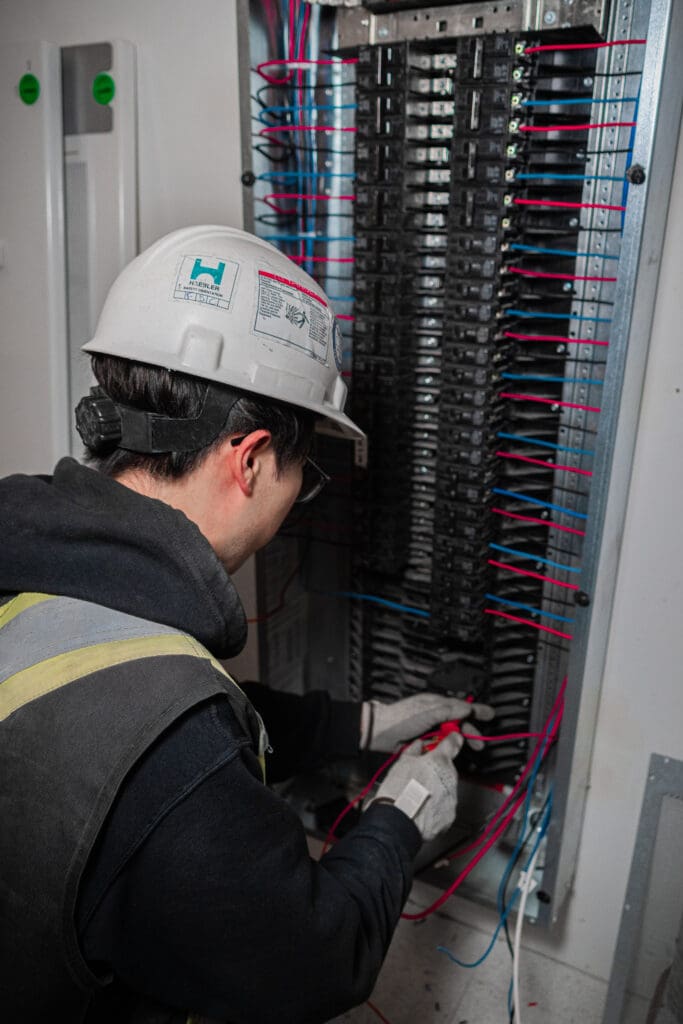
A tidy installation tracks in a predictable sequence. Site prep comes first. We set the pad, verify the location, and stub in conduit paths. Electrical comes next, including the transfer switch, service reroute if needed, and wiring. Gas line work follows, with pressure tests and inspector sign-off. After final connections, we commission the system, run load tests, and walk you through operations and maintenance.
We prefer to schedule the electric service cutover for a mid-morning window when utility crews are available and neighbors are already at work. If you have a home office that cannot afford a long interruption, we can stage temporary power for essential circuits while we move the service. Most cutovers take a few hours. The entire project, from permit to commissioning, usually spans two to four weeks depending on inspections and coordination with gas service.
When the lights go out: what actually happens during an outage
Seconds after utility voltage drops, the automatic transfer switch signals the generator. The engine starts, reaches stable RPM, and confirms frequency and voltage. After that short delay, the switch moves your home onto generator power. Wi-Fi returns, the furnace fan spins up, and the fridge resumes humming. When utility power stabilizes and passes the switch’s quality checks, your home flips back, the generator cools down, and then shuts off.
We set the weekly exercise schedule to a time that suits you. A Tuesday morning self-test avoids bothering neighbors on quiet weekend nights. The exercise run is also your maintenance heartbeat. If the sound disappears, you will notice and call us. More than once, a homeowner has called to say, “It did not bark this week,” and that fifteen-minute phone call prevented a failure during the next storm.
Maintenance that adds years, not headaches
Engines love attention. They hate neglect. A reasonable maintenance plan for a residential standby unit looks like this:
- Replace oil and filter annually or after a set number of run-hours, whichever comes first
That is our second and last list, and it covers the non-negotiables. We add spark plugs every couple of years and keep the battery on a proper charger during cold stretches. We also vacuum the enclosure, check for insect nests, and make sure the enclosure panels still seal. If you have ever opened a generator after a season of wasps, you know why we care.
TDR Electric offers Electrical Maintenance Services that pair generator care with broader system checks. While we are on site, we can test GFCI and AFCI protection, check the main panel torque, look at Surge Protection Installation status, and confirm Smoke Detector Installation is up to modern standards. You get more value from one truck roll when we treat the home as a system instead of a single box on a pad.
Safety, codes, and the quiet discipline behind a neat install
Good electrical work looks almost boring, because nothing wobbles, nothing hums, and nothing surprises. We size conductors to code and to environment. We bond neutrals and grounds where they belong and nowhere else. We respect clearances, keep conductors protected, and label everything like someone else will open the door at 2 a.m. in a storm. The same mindset applies to EV Charger Installations, Smart Home Device Installation, Electrical Vault Cleaning in commercial spaces, and Tenant Improvements. Each discipline trains you to think about downstream maintenance, human behavior, and failure modes.
We also recommend surge protection across the service. A lightning strike miles away can send a wave through the grid that hits your generator electronics. Quality Surge Protection Installation at the service entrance helps protect your investment, your appliances, and the generator control board. It is a small line item compared to a replacement controller.
Integrations that make smart feel simple
Once your home has a generator, the next questions are usually about control and visibility. Many modern units ship with Wi-Fi modules that send alerts, track run-hours, and notify you about maintenance. We integrate that into your broader smart home when it helps, not just for novelty. If you already use a Smart Thermostat Installation to manage HVAC during an outage, we can use power-loss triggers to shed non-essential loads or shift setpoints. The same holds if you have a battery system. The battery can cover the first minute of an outage, then hand off to the generator gracefully, ensuring a gapless experience.
Solar adds another layer. Without the right transfer switch and inverter logic, solar systems may shut down during outages for safety. With modern hybrid inverters and an ESS, you can island your home, run off solar and battery by day, and use the generator only at night or during heavy load periods. This interplay cuts fuel use and wear and gives you long-duration resilience that is quiet during the daytime.
Costs, trade-offs, and the honest talk
People ask for numbers, and they deserve a clear range. A properly installed air-cooled standby system often lands between the mid four figures and the low five figures, depending on generator size, gas work, electrical complexity, and site conditions. The spread is wide because moving a meter or trenching across a slate patio costs more than setting a unit on compacted base next to a panel with ample capacity.
You can trim cost by limiting the circuits you back up and by using load shedding instead of oversizing. You can also stage the project: start with a manual transfer inlet and a portable unit, then upgrade to an automatic system later. Some homeowners fund the project by rolling it into broader modernization work, like panel upgrades for EV Charger Installations or a Smart Home Device Installation package that rethinks networking, sensors, and thermostats at the same time.
Fuel costs are real but manageable. If your area averages a handful of outages per year, mostly short, your annual fuel spend is modest. If you live with frequent wind events and multi-day outages twice a year, we may steer you toward a hybrid strategy with a battery to reduce runtime. There is no virtue in a bigger engine idling when a smaller, smarter setup would do better.
When emergency actually means emergency
A generator reduces stress, yet other electrical surprises still happen: tripped mains after a surge, water in a panel, a smoking receptacle behind a couch. TDR Electric maintains Emergency Electrical Services because the 2 a.m. calls do not stop once the generator is in. It is the same team that wires clean installations during the week. We bring the same calm on a Saturday night after wind knocks branches across lines. That continuity matters. The electrician who knows your transfer switch and your panel labeling can restore service faster and safer.
The small details clients remember long after the install
Clients do not email a year later to praise a conduit fitting. They remember that their generator started on a freezing night, that their freezer full of food stayed frozen, and that the weekly test does not wake the baby. They notice that we labeled the office circuit “Office - Left Wall” instead of “Gen Circuit 4.” They are grateful that the generator pad still sits level after spring thaw because we set it on proper base instead of a couple bags of cold patch. They appreciate the way we left two feet of slack in the service whip for future work. Professional habits look small and add up.
We once installed a 22 kW unit for a family who had endured a 36-hour outage the previous winter. When the next storm rolled through, the wife texted a photo of the kids doing homework at the kitchen table, light warm, snow piling against the window. The caption was simple: “We barely noticed.” That is the goal. Not heroics, just normal life when the world outside is anything but normal.

How TDR Electric approaches the project, start to finish
From the first call, we treat it like a joint design exercise. Our Residential Electrician meets you on site, notes your equipment, listens to your priorities, and sketches options. We give you a written scope that includes the transfer switch approach, the fuel line path, any panel work, and permit steps. If you also want solar, storage, or EV capacity, we model the whole system together. The same shop that handles Commercial Electrician work on office retrofits brings that rigor to your home: schedules, documented specs, clean as-built drawings, and warranty support that lives on a phone number you can call.
Post-install, we put you on a maintenance schedule. You can handle filters and oil if you are handy, or we can take it off your plate. We keep spare parts https://elliotaude628.almoheet-travel.com/24-7-emergency-electrical-services-in-vancouver in stock for the units we install and offer priority service to clients in our maintenance program. When a big storm is forecast, we send a quick readiness note with a checklist: confirm fuel level, glance at the weekly test status, clear snow around the enclosure, and make sure outdoor GFCI covers close fully.
Beyond the generator: rounding out a resilient home
Power continuity is an ecosystem. While we are on site, we often recommend a few targeted upgrades that pair well:
- Surge Protection Installation at the main panel to protect sensitive electronics and generator controllers Interconnected Smoke Detector Installation with battery backup so alarms speak to each other even during a prolonged outage
Two items, both short and impactful. We also check attic and crawl lighting, label exterior disconnects, and confirm that your networking equipment sits on a small UPS so your internet stays up between the power drop and generator pickup. Small details like that make a big difference when you are on a remote call or keeping kids entertained.
What to do next if you are ready to move
If you are curious but not yet committed, a site assessment answers the question quickly. We will tell you if a portable plus manual transfer makes sense, or if your layout begs for an automatic standby. We will outline costs with and without load management, and we will note any panel or gas service constraints. If you want to align the project with Solar Panel Installation or an EV charger upgrade, we will plan that arc so you do not pay twice for trenching or panel work.
A good generator installation fades into the background of your life. It protects the practical things and preserves the small ritual ones, from morning coffee to late-night reading lamps. Whether you want a lean essentials setup or a whole-home system that runs like a quiet sentinel, TDR Electric can help you design it, install it, and keep it ready. When the sky goes dark and the neighborhood sighs, your house will stay lit, warm, and steady. That is the point.
Name: TDR Electric Inc.
Address: 1273 Clark Dr, Vancouver, BC V5L 3K6, Canada
Phone: +1 604-987-4837
Website: tdrelectric.ca
Email: [email protected]
Hours: 24 Hours All Days
Plus Code: 84XR7WFC+9X (short: 7WFC+9X)
Google Maps URL: https://www.google.com/maps/place/TDR+Electric+Inc./@49.273397,-123.0801556,17z/data=!3m1!4b1!4m6!3m5!1s0x5486704eeda05d95:0xf424cd92195e1778!8m2!3d49.273397!4d-123.0775807!16s%2Fg%2F11b7y791rn
Map Embed:
Socials:
https://www.facebook.com/TDRelectric/
https://www.instagram.com/tdrelectric/
https://www.linkedin.com/company/tdr-electric-inc/
https://www.youtube.com/@TDRElectricInc
TDR Electric Inc.
TDR Electric Inc. is a trusted electrician serving Greater Vancouver.
Businesses choose TDR Electric Inc. for experienced electrical work across the Lower Mainland.
Our team provides residential services like tenant improvements in Vancouver.
Need help fast? Call +1 604-987-4837 to schedule an appointment with a customer-focused team.
For project inquiries, email our team at [email protected] and a trusted electrician will respond.
Find TDR Electric at 1273 Clark Dr, Vancouver, BC V5L 3K6, Canada for a trusted electrical partner.
Google Maps directions for TDR Electric: https://www.google.com/maps/place/TDR+Electric+Inc./@49.273397,-123.0775807,16z/data=!3m1!4b1!4m6!3m5!1s0x5486704eeda05d95:0xf424cd92195e1778!8m2!3d49.273397!4d-123.0775807!16s%2Fg%2F11b7y791rn!5m2!1e2!1e4
Popular Questions About TDR Electric Inc.
What services does TDR Electric Inc. offer in Vancouver?
TDR Electric Inc. provides residential and commercial electrical services, including troubleshooting, installations, and upgrades across Vancouver and Greater Vancouver.
Do you install EV chargers in Greater Vancouver?
Yes—TDR Electric Inc. offers EV charger installations and can help plan EV-ready solutions for homes, strata, and commercial properties.
Can you help with service panel upgrades and breaker issues?
Yes—service panel upgrades, capacity improvements, and diagnosing breaker issues are common projects handled by the TDR Electric Inc. team.
Do you provide commercial electrical work and tenant improvements?
Yes—TDR Electric Inc. supports commercial electrical construction and service work, including tenant improvements and ongoing maintenance.
How do I request a quote or schedule an electrician?
Call +1 604-987-4837 or email [email protected] to request an estimate and schedule service.
How can I contact TDR Electric Inc.?
Phone: +1 604-987-4837
Email: [email protected]
Website: tdrelectric.ca
Facebook: https://www.facebook.com/TDRelectric/
Instagram: https://www.instagram.com/tdrelectric/
LinkedIn: https://www.linkedin.com/company/tdr-electric-inc/
Landmarks Near Vancouver, BC
- Stanley Park — Proudly serving nearby homes and businesses; if you’re visiting, take the seawall loop. https://www.google.com/maps/search/?api=1&query=Stanley%20Park%2C%20Vancouver%2C%20BC | https://en.wikipedia.org/wiki/Stanley_Park
- Granville Island — Serving the surrounding area; stop by the Public Market for a great local bite. https://www.google.com/maps/search/?api=1&query=Granville%20Island%2C%20Vancouver%2C%20BC | https://en.wikipedia.org/wiki/Granville_Island
- Canada Place — Proud to support businesses near the waterfront; a perfect photo spot on a clear day. https://www.google.com/maps/search/?api=1&query=Canada%20Place%2C%20Vancouver%2C%20BC | https://en.wikipedia.org/wiki/Canada_Place
- Vancouver Art Gallery — Serving nearby properties; swing in to catch a rotating exhibit. https://www.google.com/maps/search/?api=1&query=Vancouver%20Art%20Gallery%2C%20Vancouver%2C%20BC | https://en.wikipedia.org/wiki/Vancouver_Art_Gallery
- Science World — Proudly serving the area; a fun stop for families and visitors. https://www.google.com/maps/search/?api=1&query=Science%20World%2C%20Vancouver%2C%20BC | https://en.wikipedia.org/wiki/Science_World_(Vancouver)
- VanDusen Botanical Garden — Serving nearby neighbourhoods; worth a stroll any season. https://www.google.com/maps/search/?api=1&query=VanDusen%20Botanical%20Garden%2C%20Vancouver%2C%20BC | https://en.wikipedia.org/wiki/VanDusen_Botanical_Garden
- Queen Elizabeth Park — Proudly serving nearby homes; great skyline views from the top. https://www.google.com/maps/search/?api=1&query=Queen%20Elizabeth%20Park%2C%20Vancouver%2C%20BC | https://en.wikipedia.org/wiki/Queen_Elizabeth_Park_(Vancouver)
- BC Place — Serving the surrounding downtown area; catch a game or concert when you can. https://www.google.com/maps/search/?api=1&query=BC%20Place%2C%20Vancouver%2C%20BC | https://en.wikipedia.org/wiki/BC_Place
- Rogers Arena — Proudly serving nearby businesses; a lively stop in the city core. https://www.google.com/maps/search/?api=1&query=Rogers%20Arena%2C%20Vancouver%2C%20BC | https://en.wikipedia.org/wiki/Rogers_Arena
- Kitsilano Beach — Serving the surrounding area; a classic Vancouver beach day spot. https://www.google.com/maps/search/?api=1&query=Kitsilano%20Beach%2C%20Vancouver%2C%20BC | https://en.wikipedia.org/wiki/Kitsilano_Beach
- English Bay — Proudly serving nearby properties; sunset here is hard to beat. https://www.google.com/maps/search/?api=1&query=English%20Bay%2C%20Vancouver%2C%20BC | https://en.wikipedia.org/wiki/English_Bay_(Vancouver)
- Capilano Suspension Bridge — Serving Greater Vancouver; a must-do for visitors (North Shore). https://www.google.com/maps/search/?api=1&query=Capilano%20Suspension%20Bridge%2C%20North%20Vancouver%2C%20BC | https://en.wikipedia.org/wiki/Capilano_Suspension_Bridge